
The Fleet
Clipper 70
The third generation of one-design Clipper Race yachts debuted in the Clipper 2013-14 Race, proving to be faster and more dynamic than previous Clipper Race yachts, breaking speed records of 35 knots.
The 70-foot yachts make up the world’s largest matched fleet of ocean racing yachts. Designed by renowned naval architect Tony Castro, they are the shining jewel in the Clipper Race crown, perfectly adapted to this gruelling sailing challenge.

Below deck
The Clipper 70s are not for the work-shy. They are by design stripped of all luxuries. Race Crew must become experts at living in a confined space, managing all their kit and belongings as they settle into their new home.
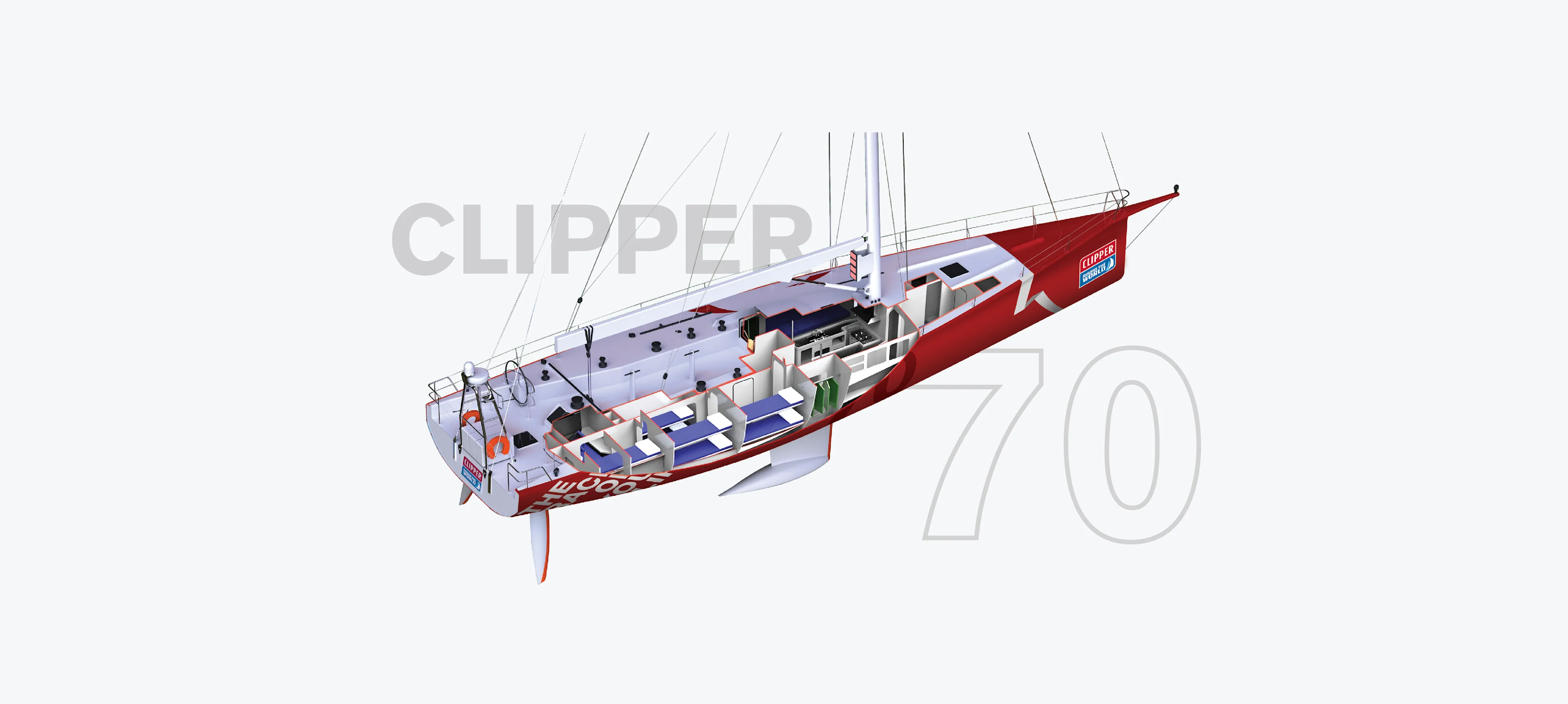
Diagram

The Galley

Living space
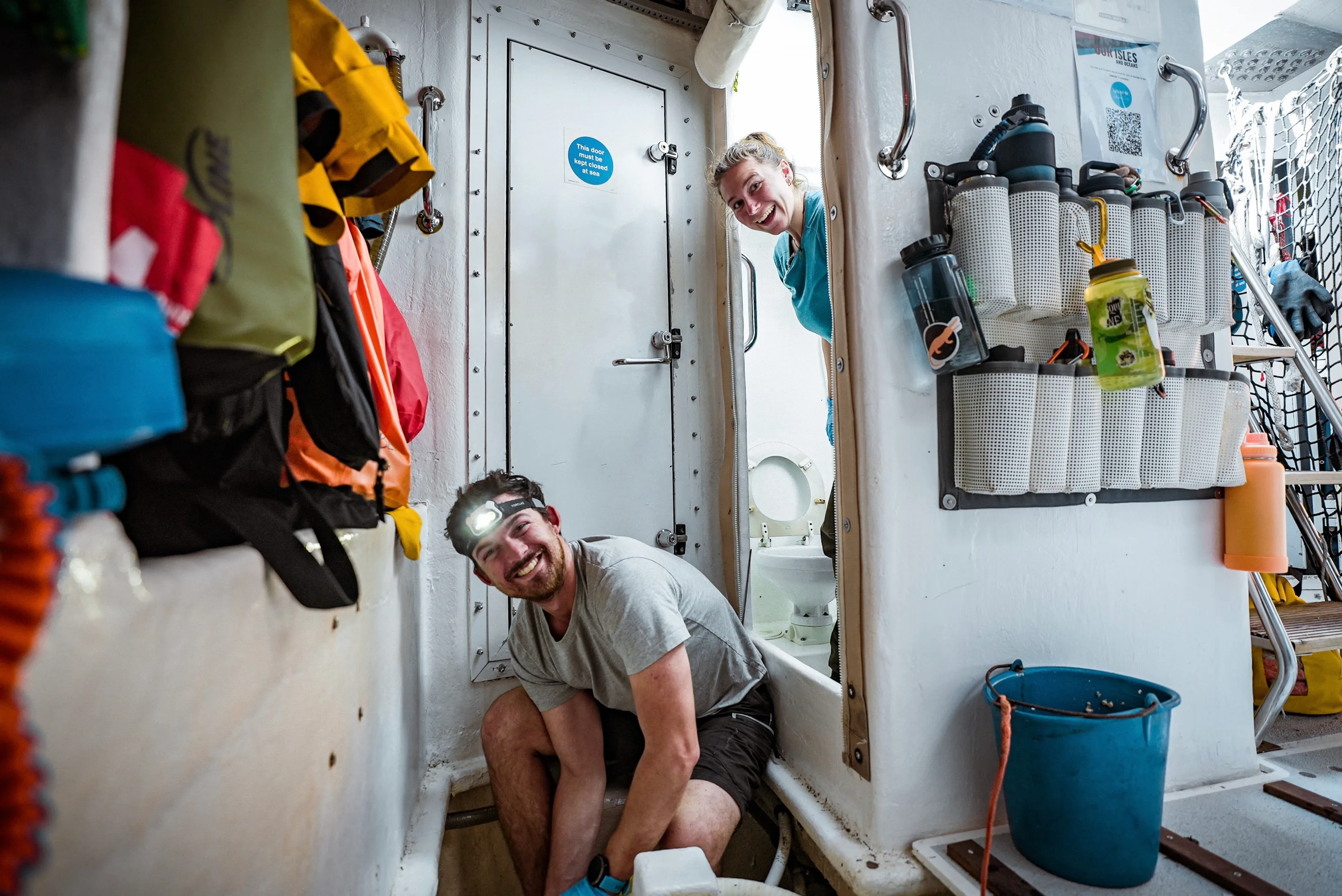
The heads

The Nav Station
The Design
The Clipper 70s feature twin helms, twin rudders, and a six-foot bowsprit, which allows the inclusion of three large asymmetric spinnakers and a suite of yankee headsails, which combine to increase performance and boat speed. The hull is optimised for performance and control, with particular consideration given to maximising speed in the challenging light winds found near the equator. All in, the design of the Clipper 70s provides total control in the heaviest of conditions, ensuring not only high speeds, but safety too.

Optimised for performance
The Clipper 70’s hull is engineered to excel in downwind conditions. Delivering total control in rough seas, combining speed and stability for ultimate racing efficiency.

High-performance Sails
Hyde SailsEach yacht carries 11 high-performance sails from Hyde Sails, including storm sails for extreme weather, yankees and a staysail for upwind power, and three spinnakers for downwind speed.
FAQs
Find answers to commonly asked questions about Clipper 70s...
Your first two stages of training will be carried out on a Clipper 68. Most Level 3s take place on a Clipper 70 and then for your Level 4, you'll be on a Clipper 70, training with the Skipper and First Mate who'll lead you around the world, along with your team mates.
The fleet is fully refitted ahead of each edition. Then during the circumnavigation, our expert Maintenance Team travels to each stopover to carry out any required work following an ocean crossing.
Yes, you'll have the opportunity to explore one of our 70-foot Clipper Race yachts at many of our key events including Race Start and Finish and stopovers around the world. We also host regular 'open boats' at our Training HQ in Gosport. Check out our events page or email oceanracer@clipper-ventures.com for details of tours coming up.