
Apply Now
Join the adventure of a lifetime and apply for the Clipper Round the World Yacht Race.
Apply NowDiscover EventsBegin the journey
Joining the Clipper Race is truly the adventure of a lifetime. A life-changing challenge, it will push you far outside your comfort zone.
It’s a race that quite literally crosses boundaries, so naturally, application is open to all – regardless of gender, nationality, age or nautical experience.
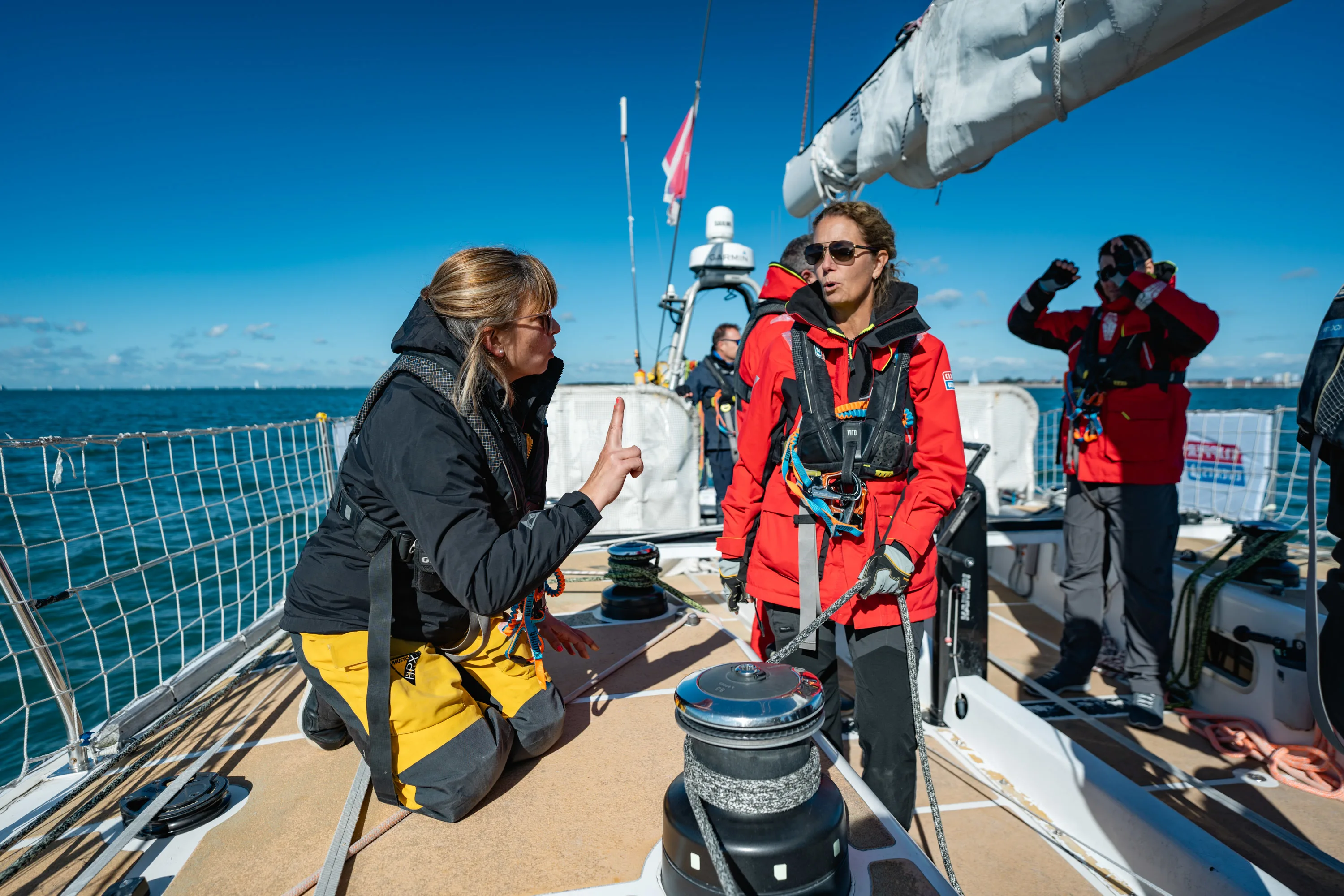
We only ask that you bring a resilient mental attitude and an enthusiasm for learning – along with a good level of physical fitness. We’ll teach you everything you need to become a safe, competent ocean sailor – including advanced sea survival training, making you ready to race.
YOUR JOURNEY TO RACE CREW
Step 1
Download Information Pack
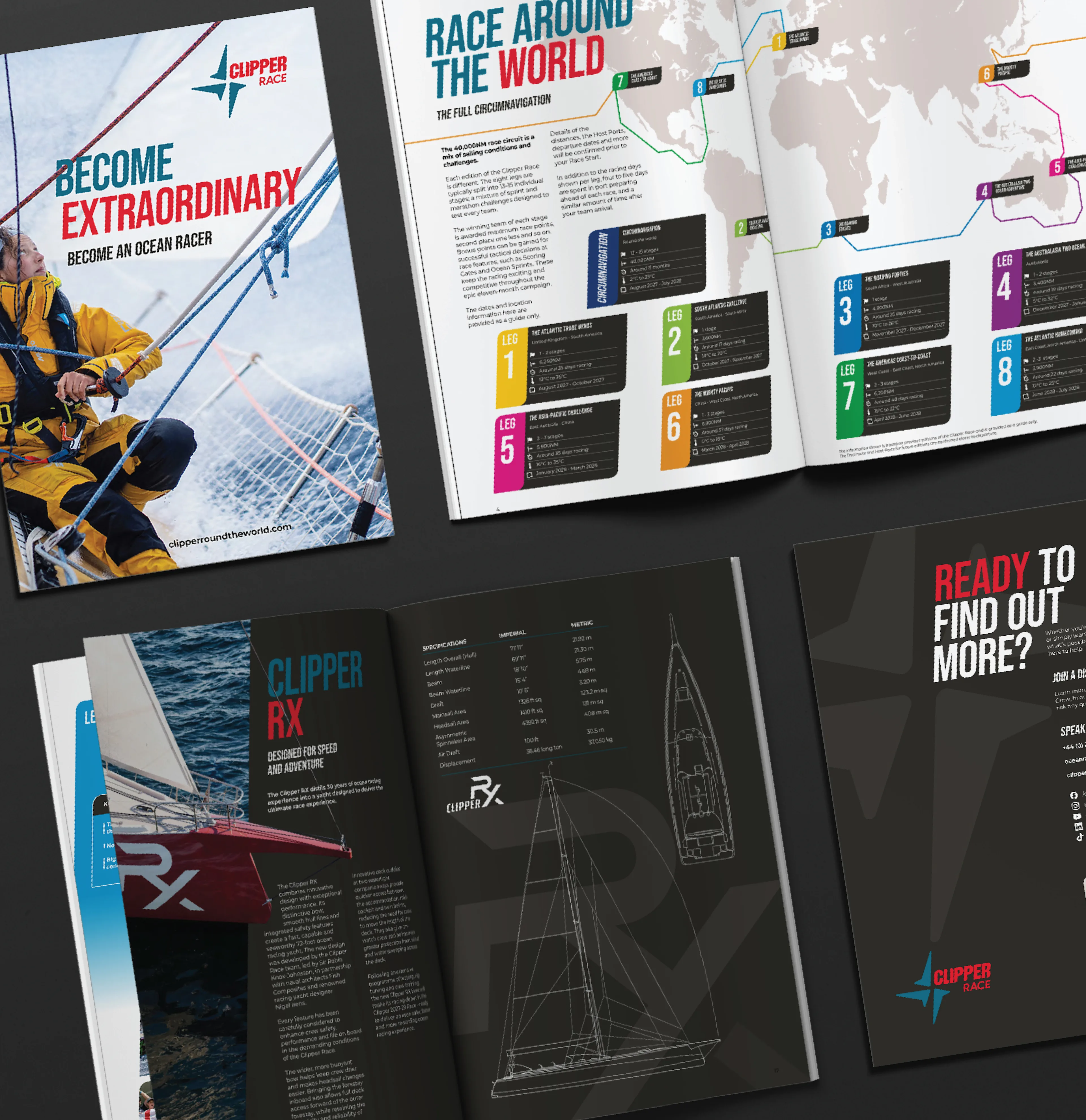
To get started, download this information pack. It contains all the key details you need to know about the race – and should whet your appetite for adventure.
Step 2
Join a Discovery Webinar
Discover the qualities we seek in our crew, gain insights into the selection and training process, and learn what to expect when racing as part of a team. Get all the information you need and have your questions answered in a live Q&A session.
Step 3
Tell us about yourself
Start your Clipper Race journey by filling out a short online Application form. This captures your details, motivations and more, and once submitted our team will guide you through the next steps.

Step 4
Informal Interview
We’ll invite you for an informal interview, where we’ll discuss your goals for the challenge and give you more information on the training process. If successful, you’ll then receive a contract offer for your chosen leg or legs. Once you accept this you can begin making your payments and plan your training.
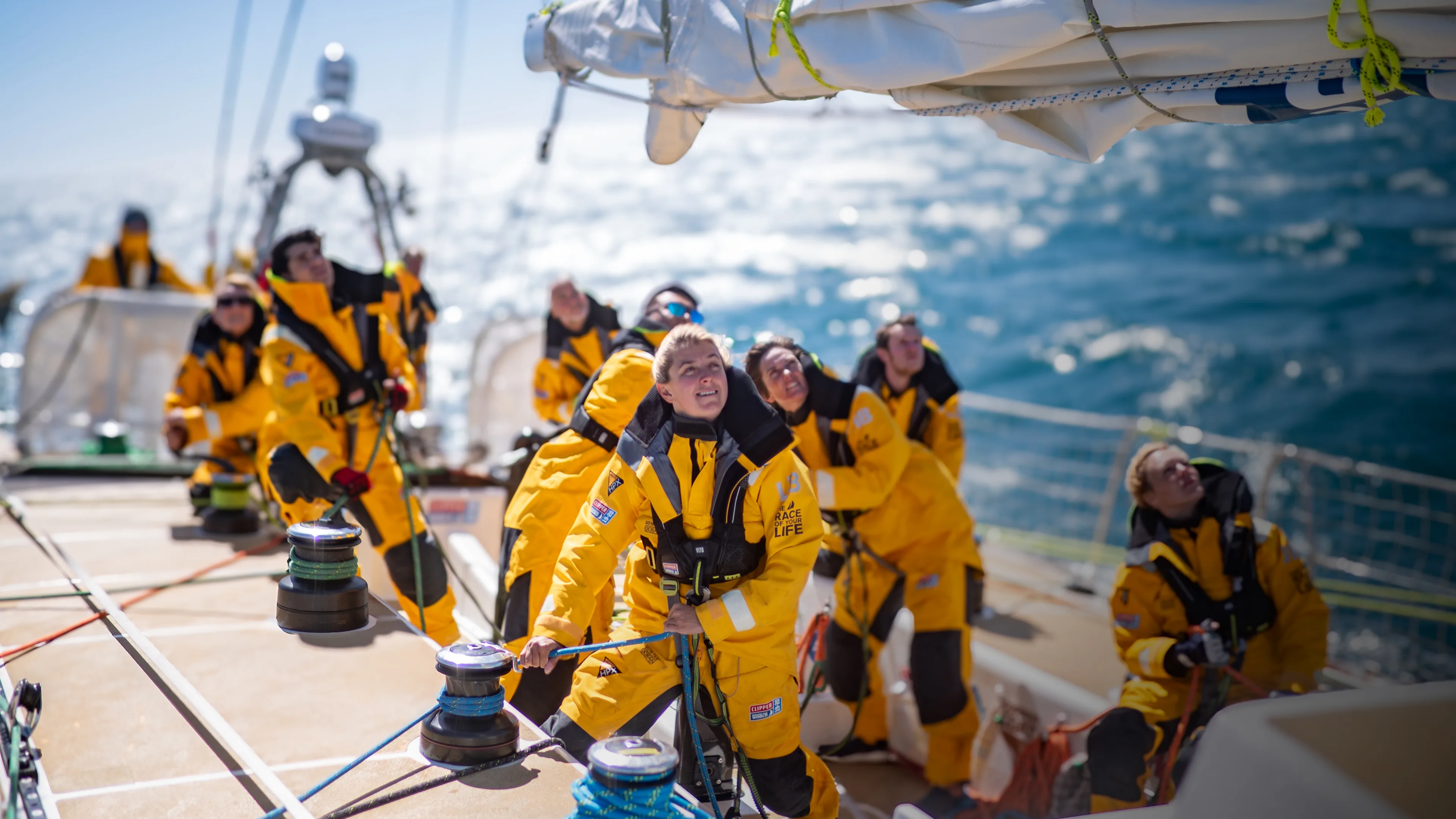
How much does it cost?
Build your raceRace Crew have the opportunity to spread their training and berth fees with equal monthly payments.
Crew Stories
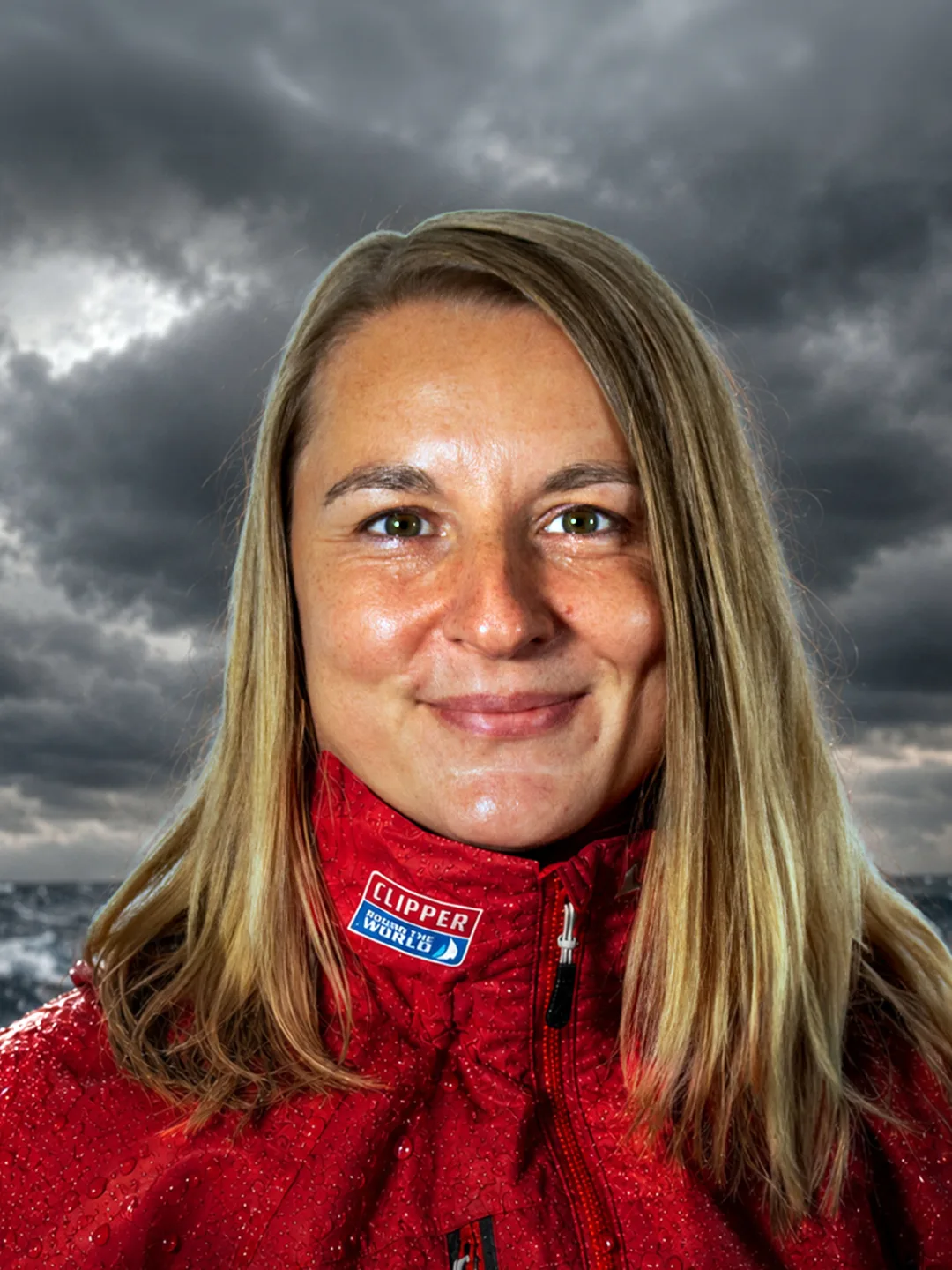
From Project Manager to Ocean Racer
Christin, Project Manager, 38
Legs 2 & 3 on board Tongyeong
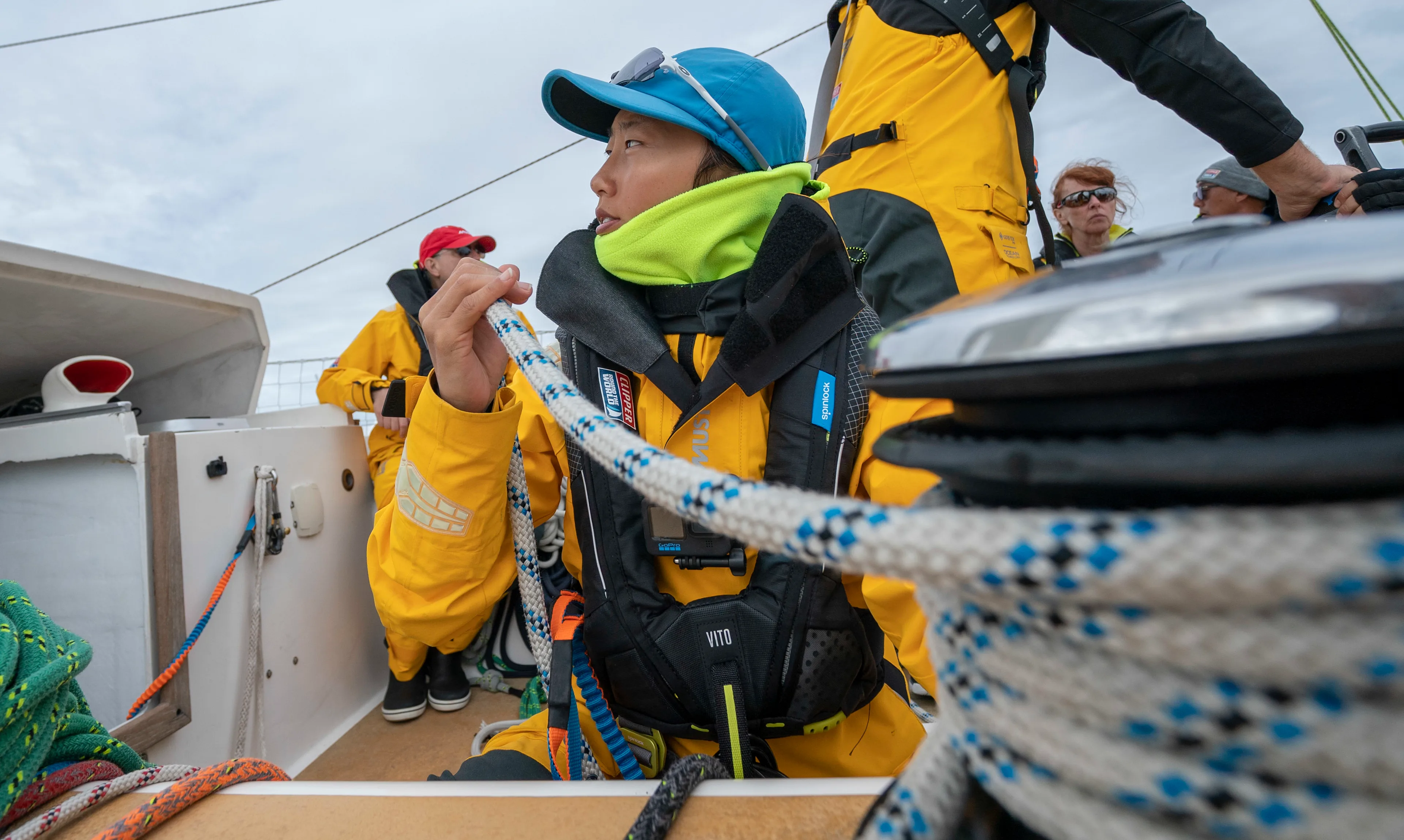
Christin had enjoyed sailing on Leipzig’s lakes, Legs 2 and 3 of the Clipper Race would prove to be a much bigger challenge. She signed up to race from Uruguay to Western Australia via Cape Town, South Africa. In total, Christin raced around 10,500 nautical miles over three continents.
"I thought when I applied it might change my life. And it did"
Crew Stories
Escaping the corporate rat race
Olaf, Engineer, 58
Circumnavigator on board Ha Long Bay, Viet Nam
A chance encounter with the Clipper Race team at Boot Düsseldorf set Olaf on a life-changing course; signing up for the full circumnavigation, packing his life up and heading to sea - a decision he never regretted.

THE NEXT STEPS
The Training
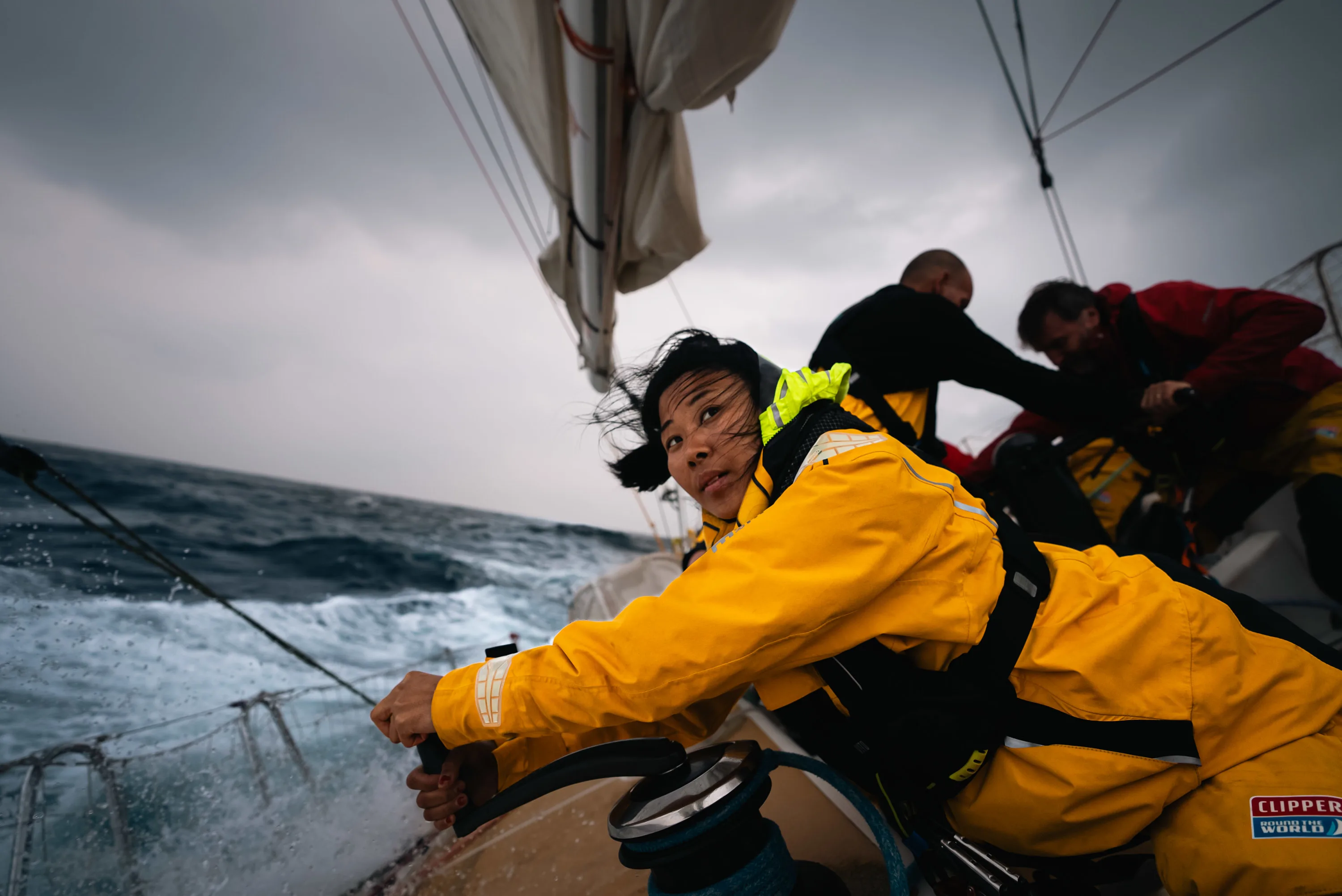
Becoming an ocean racer demands rigorous training. Every crew member, regardless of experience, completes four levels of Clipper Race training to tackle the world's most challenging conditions.


Frequently asked questions
If you pass the interview stage, we’ll offer you a contract – your Clipper Race Crew Agreement. This is a legal document that sets out what we will do and provide, and what we require of you. Please read it carefully and thoroughly and do seek legal advice or support if any elements are unclear. It’s important to remember that by signing it you will be bound by all of the terms and conditions contained within it. This is where the adventure becomes a reality. You should ask yourself; do I really have what it takes; can I commit the time (do you need an agreement with your employer/business partners); do I have the finances in place; are my family and friends supportive and is there anything that could happen in the interim that would prevent me from taking part?
Our team can work with your time frames. Some applicants need time to consider each stage, whilst others want to fast-track and start training as soon as possible. The Recruitment Team will be there to support you through the process every stept of the way.
Join the Race
40,000nm. 5 Oceans. 1 Circumnavigation. See you on the start line.